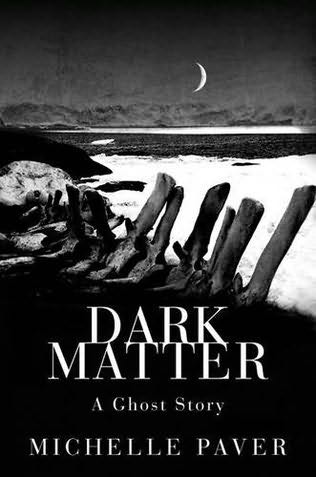

Epistolarity, by definition, lives in print. Epistolary forms of writing create an image of disembodiment in a relationship between the writer and their addressee, disrupting traditional linearity and adding a level of unpredictability. Instead of the author listed on the cover of the book addressing the reader, there is now a new ambivalent connection formed, focused entirely on the characters.
Dark Matter by Michelle Paver disrupts the preconceived ideas of an epistolary story by mixing a structure of a chaptered novel with continuous journal entries of Jack Miller, a physicist joining an Arctic expedition. The entire novel is written from the point of view of Jack, including his journal entries, and the ambiguous chapters wherein Jack implies that he is the one documenting the events through writing, while also referencing the journal the reader has been exposed to throughout most of the book. Jack, to an average reader, is unbearable. His thoughts and impulses are irrational, and his decisions don’t match his ruminations. The novel is a ghost story, and Jack’s mind is the main subject of the haunting. The novel begins with the only letter not written by Jack. Instead, it’s Jack’s companion, Algernon Carlisle, responding to a request to share his memories of the Arctic expedition for a “monograph on ‘phobic disorders’”, which he dismisses. He then brusquely paints a picture of the events which took place 10 years ago, and which the reader is about to witness. The plot of the book, in short, is ambiguously summarised in the prologue.
Dark Matter is a ghost story which deals with isolation and misery, and Jack is an epitome of both. He is poor and lonely, and it makes him feel like an outlier even as he accepts the job to go to Spitsbergen. He makes the decision, which will soon change the course of his life, when he sees a drowned body being dragged out of the Thames. The destination of the expedition is Gruhuken, located on the northeast cost of Svalbard. It is an uninhabited desolate area infected by dark history and rumours, which the members of the expedition – Jack, Gus and Algie – fail to treat seriously. As Jack remains the sole inhabitant of the shore due to a misfortune which pushes Gus and Algie to leave for an uncertain time, he is challenged by visions, dreams and the reality of his position – the island is haunted by a draug, a man who was brutally murdered on the island, and his only companion to stay sane is a dog. A draug, according to a chapter on folklore from a book Jack reads, is the unquiet spirit of a drowned man who lurks in the shallows, waiting to drag the unwary to their doom. The body in the Thames is the first sign of the horrors which are soon to haunt Jack. The second is the death of a person who is dear to him, taken by a draug, marking the beginning and the end of the expedition.
The novel does not attempt to scare the reader with gratuitous violence (with some exceptions), instead confronting the reader with the reality of desolation and savagery which is prevalent in humanity. As the novel takes place in 1937, Jack often refers to the World Wars and their effect on people, thus not allowing for a sense of safety and security even at home, in the past or in the future. The epistolary form of the writing, in the case of Dark Matter, does not provide Jack with an audience, because the journal is inaccessible to anyone but him. Yet it aids at enhancing the feeling of isolation that the character is forced into by his own volition, just as he refused to leave Gruhuken even in terror.